Each scene numerically solves the time-dependent Schrödinger equation on a 2D or 3D grid, propagating a complex wavefunction ψ through an optical scene encoded as a potential field. Mirrors, lenses, and absorbers are all represented by spatially-varying complex potentials — the real part bends and slows the wave; the imaginary part absorbs it. Incoherent illumination is approximated by injecting wave packets at randomised frequencies each timestep and accumulating |ψ|² into a long-exposure intensity image.
Two solvers are used: RK4 (4th-order Runge–Kutta, explicit finite-difference) and SSFM (split-step Fourier, kinetic term solved exactly in frequency space — unconditionally stable, larger timesteps). Scenes run on either a Go CPU or Taichi GPU backend, deployed on AWS EC2.
 Open PDF
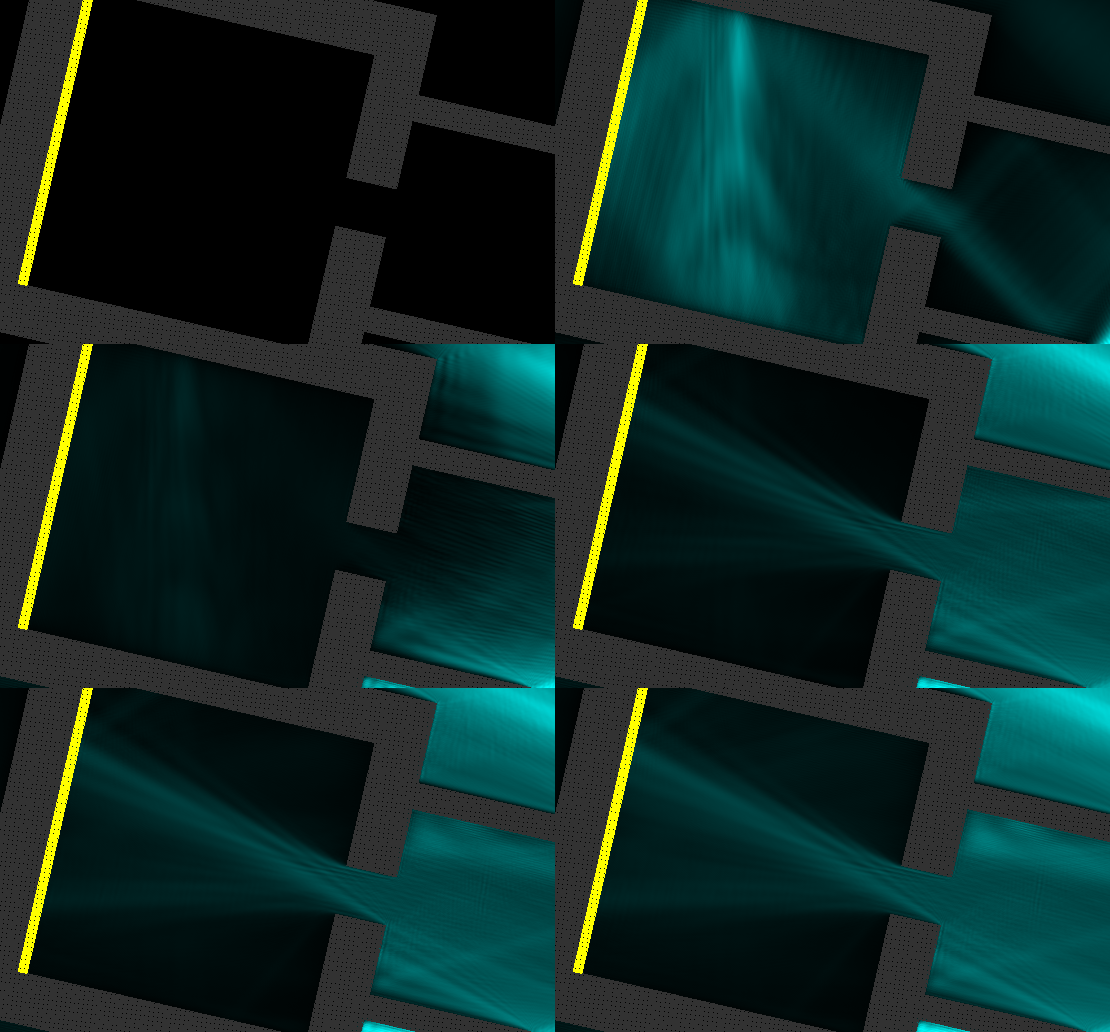
A parabolic solar collector illuminated by parallel rays entering at 45° from the top-left. The mirror focuses the wavefront onto a small absorber at its focal point, demonstrating diffraction-limited concentration of wave energy.
2D RK4 9-point Isotropic Go CPU Diffraction Interference
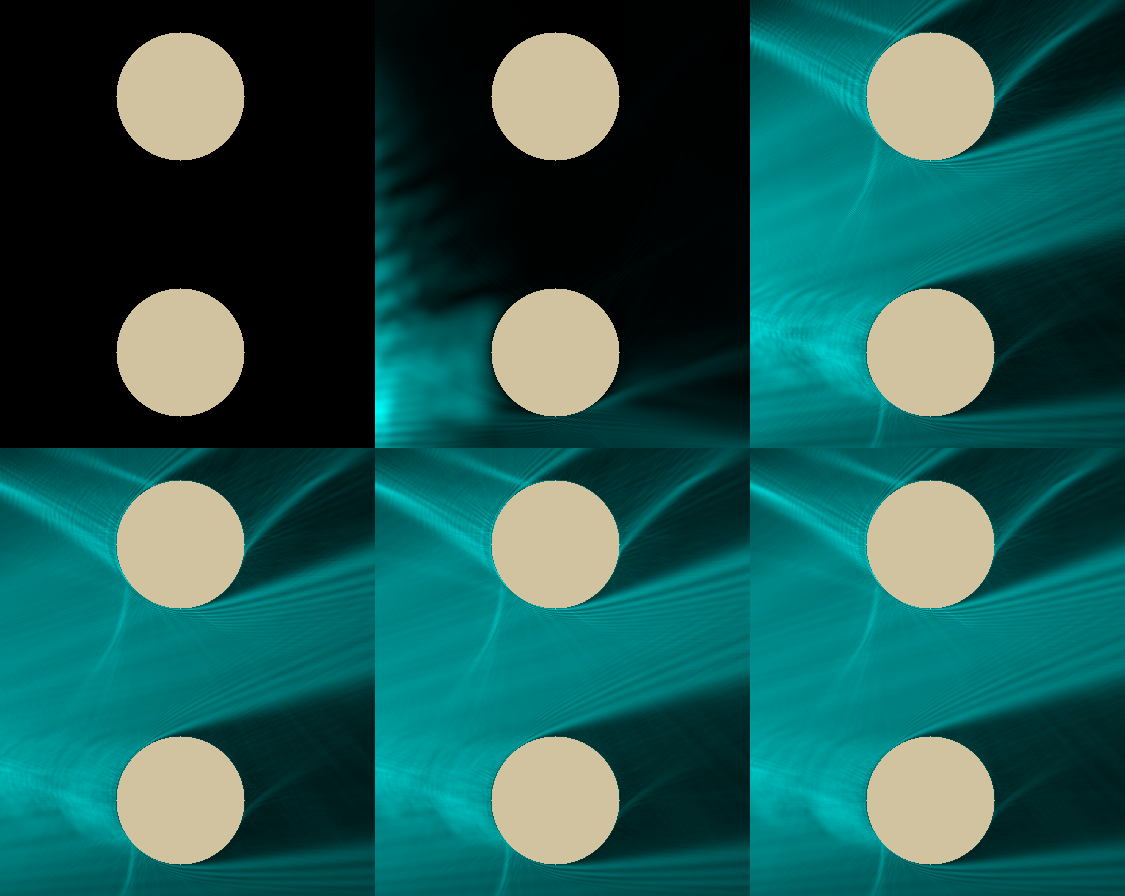
A reflective circle illuminated by an incoherent radial source, imaged through a pinhole camera. The sensor strip captures an inverted, diffraction-limited image of the object.
A thin wall on the right side of the scene demonstrates quantum tunnelling — the wave partially penetrates the barrier despite having insufficient energy to pass classically.
2D RK4 9-point Isotropic Taichi GPU Pinhole Incoherent Source
A parabolic spotlight with a secondary mirror directs an incoherent broadband source toward a torus, while a hooded pinhole camera captures the image from below. A baffle blocks direct illumination of the camera.
The SSFM solver propagates the kinetic term exactly in Fourier space, allowing unconditionally stable evolution at large timesteps. Captures zoom into the camera and torus regions with independent exposure normalisation.
2D SSFM Taichi GPU Pinhole Parabolic Mirror Incoherent Source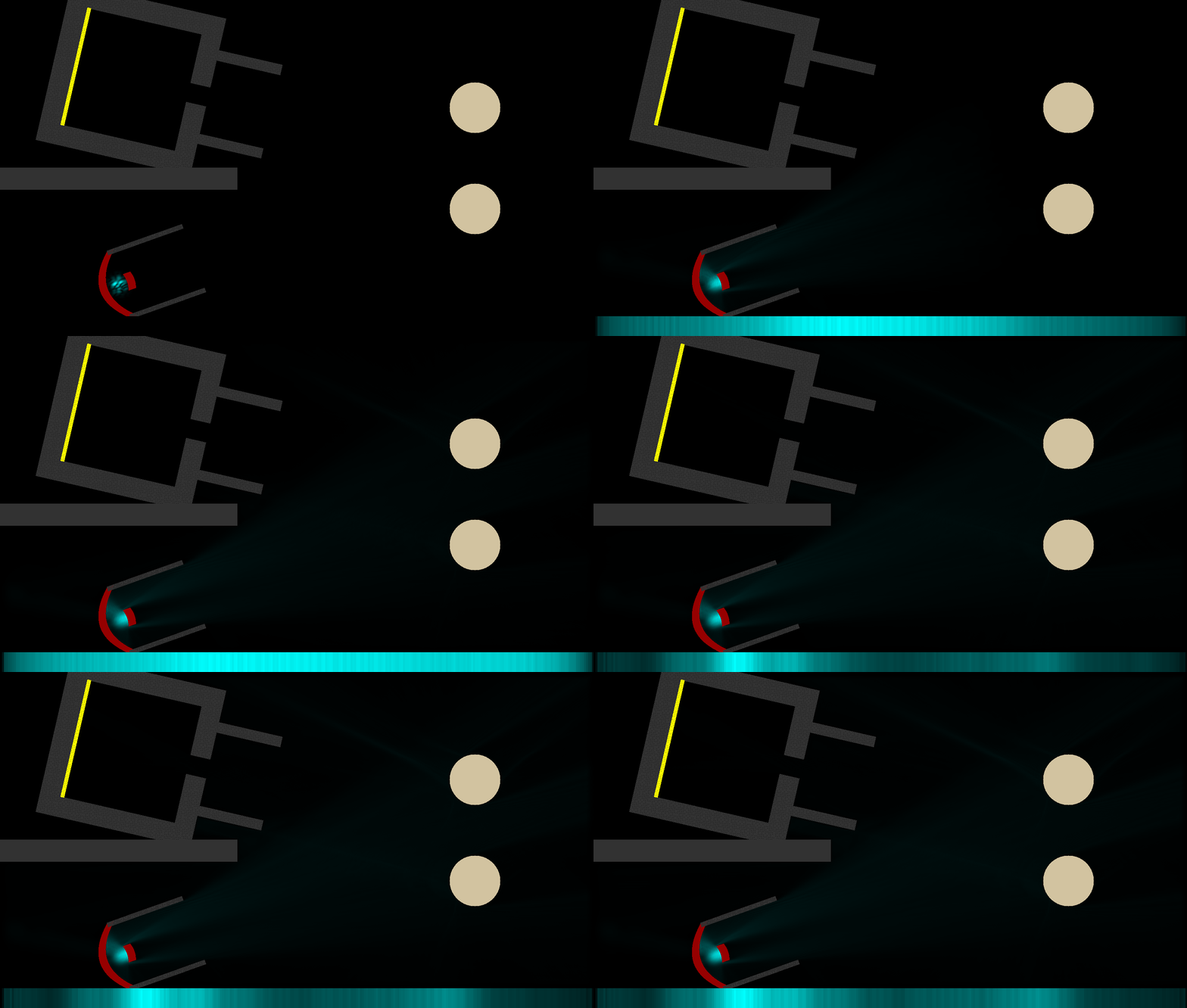
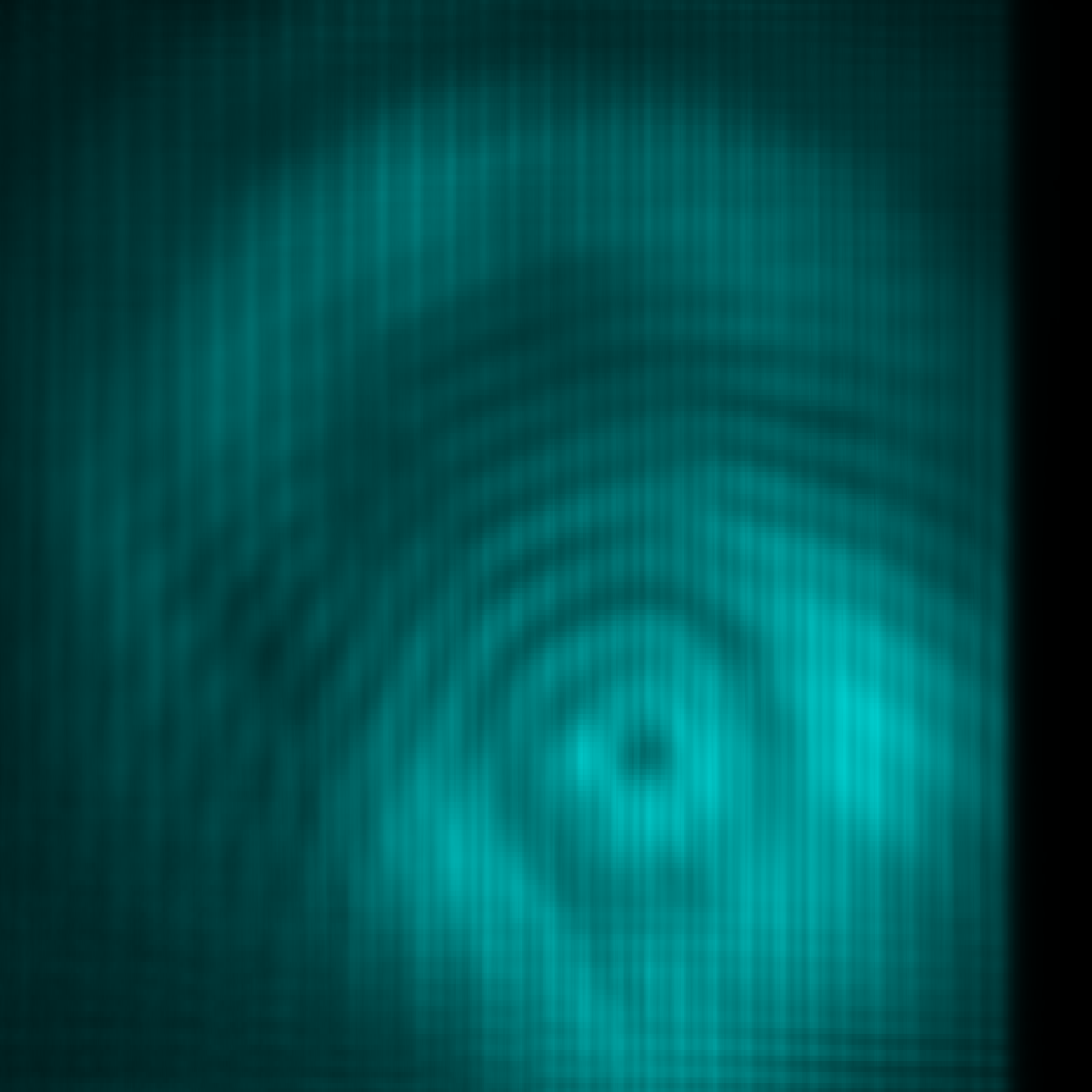
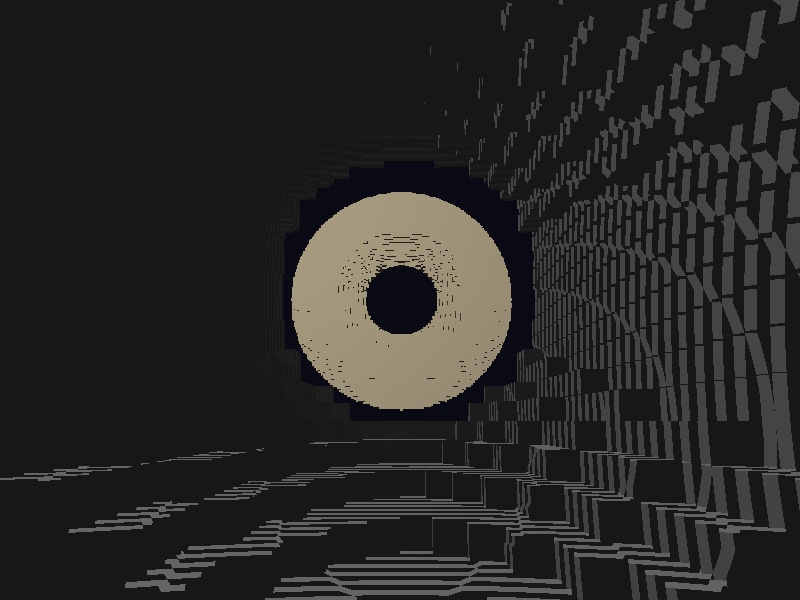
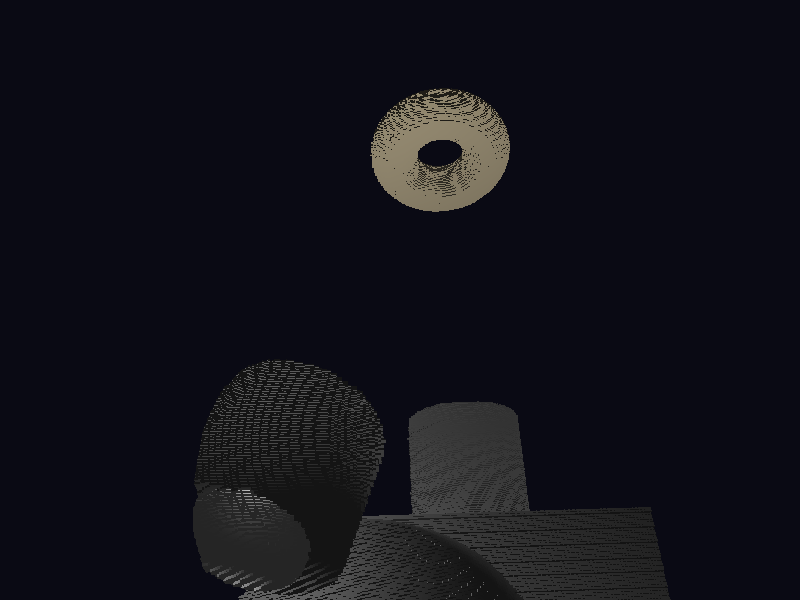
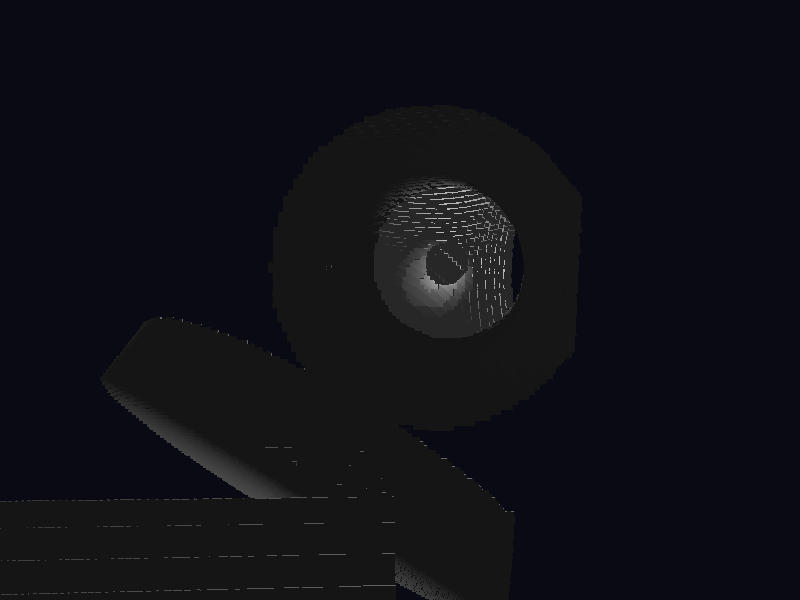
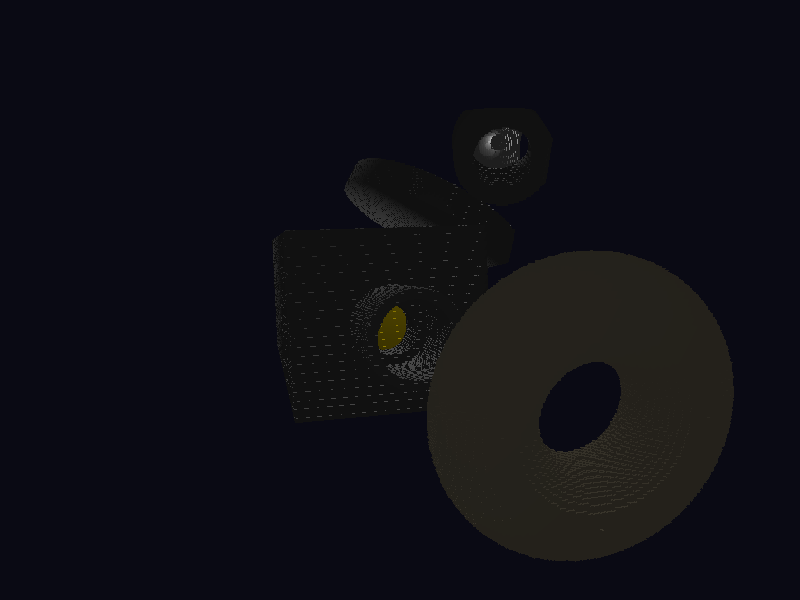
A full 3D simulation of a pinhole camera observing a reflective torus. The wave is injected as a 3D incoherent radial source; the 3D RK4 solver propagates the complex wavefunction on a voxel grid using a 19-point isotropic Laplacian stencil (6 face + 12 edge neighbours).
The sensor plane is a 2D slice rendered via the camera system. A raytraced scene overview and expected geometric projection outline are shown alongside the quantum intensity result.
3D RK4 19-point Isotropic Taichi CUDA Pinhole Raytracing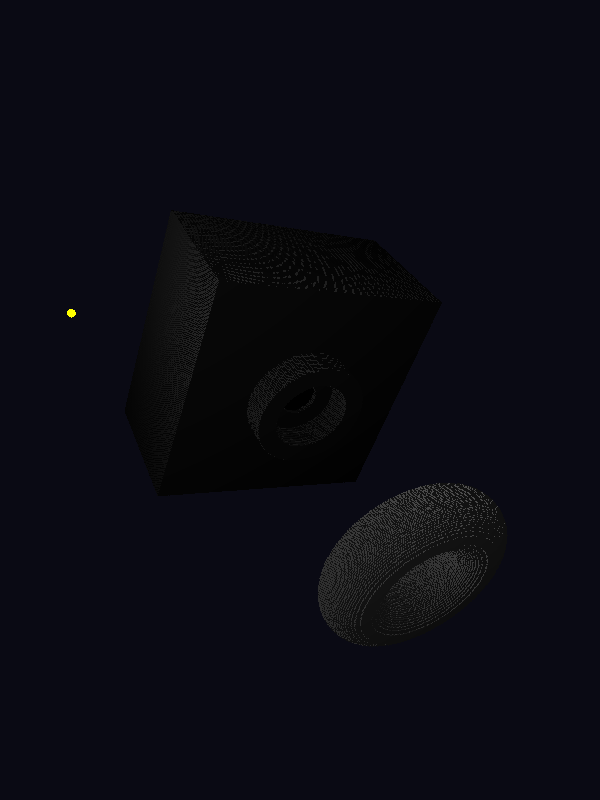



The same 3D pinhole torus setup scaled up to a 2400×800×800 voxel grid. Switching to SSFM makes this grid size feasible — the kinetic term is applied exactly in Fourier space across the full volume, with the potential step handled separately. The simulation runs on an L40S (48 GB) GPU via AWS EC2.
3D SSFM Taichi CUDA Pinhole Raytracing